Japanese MTG cards are not interesting only because of the language printed on them. Some of the most fascinating collectibles in Magic: The Gathering feature Japanese landscapes, cultural landmarks, and artistic references, even when the cards themselves are printed in English.
One particularly interesting example is the APAC Lands collection, a series of promotional basic lands released in 1998. Featuring five illustrations connected to Japan, including the iconic Mount Fuji, these cards are a fascinating discovery for anyone collecting Japanese-inspired Magic cards.
What Are APAC Lands in Magic: The Gathering?
APAC stands for Asia-Pacific, and the APAC Lands are a special series of 15 promotional basic land cards released by Wizards of the Coast in 1998.
Unlike ordinary basic lands, these cards feature alternative artwork depicting landscapes and locations from different countries in the Asia-Pacific region. Japan, China, Australia, Hong Kong, Taiwan, Singapore, Indonesia, New Zealand, the Philippines, and South Korea are all represented.
The collection consists of three different five-card promotional packs, each identified by the color of its packaging:
- Red Pack: released in September 1998.
- Blue Pack: released in October 1998.
- Clear Pack: released in November 1998.

Each pack contains one Plains, one Island, one Swamp, one Mountain, and one Forest, giving collectors a total of 15 different cards.
These promotional packs were associated with purchases of Tempest booster boxes. Their distribution and availability varied across markets, making them a distinctive part of Magic’s late-1990s promotional history.
Why Were the APAC Lands Released?
The APAC Lands were not simply another collection of alternative basic lands. They were part of a wider effort to strengthen Magic: The Gathering’s presence in the Asian-Pacific market.
During the 1990s, Magic was expanding internationally, but its predominantly Western fantasy setting did not necessarily connect with every potential audience in the same way.
Wizards of the Coast experimented with a different approach: instead of introducing an entirely new fantasy setting, it created cards celebrating the real-world geography and landscapes of the region.
This gave players something familiar and recognizable. They could see places from their own countries represented in a game that was becoming increasingly popular around the world.
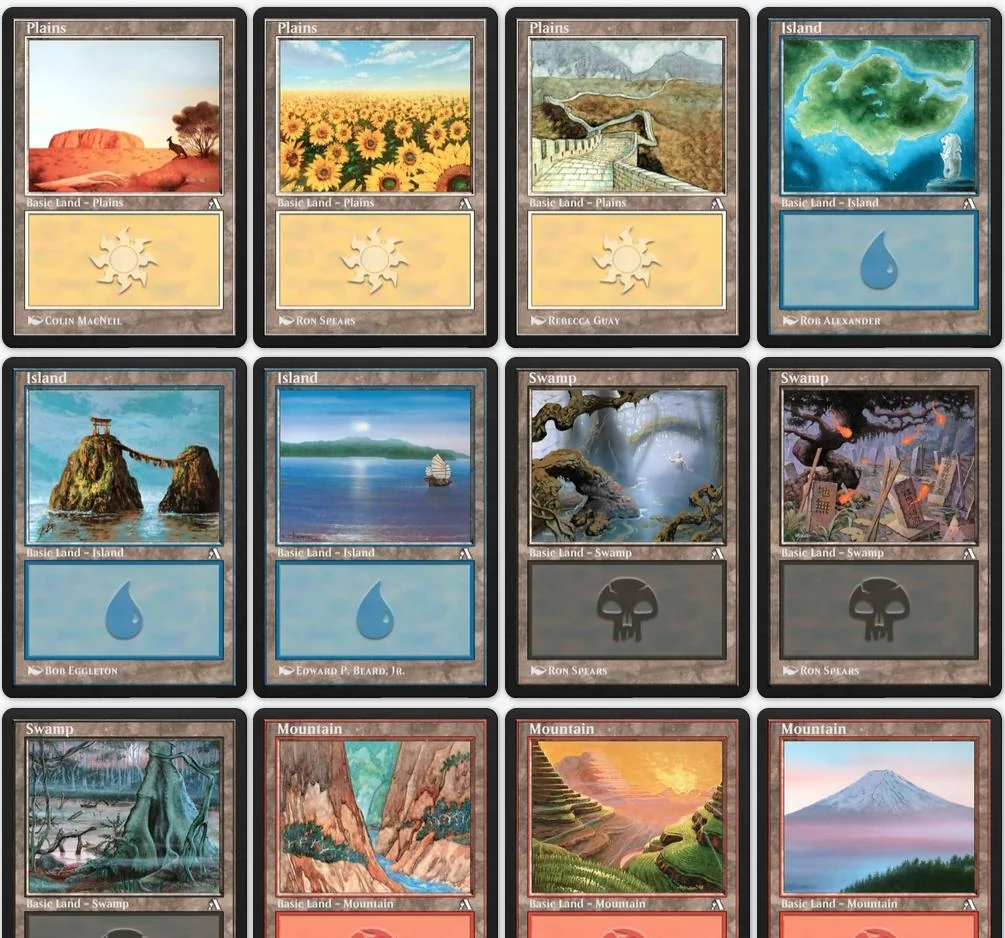
The result was a series that combined promotional marketing, regional identity, and collectible artwork.
Today, that original concept is part of what makes APAC Lands so appealing. These cards are not just different versions of basic lands: they document an interesting chapter in Magic’s international history.
Japanese-Inspired MTG Cards from the APAC Lands Collection
For collectors interested in Japan, the APAC Lands offer five particularly interesting cards spread across the three promotional packs.
Each one has its own visual identity, and together they make a small but fascinating collection of Japanese-inspired Magic artwork.
1. Red Pack – Plains: A Japanese Landscape
The Red Pack Plains is one of the two cards in this first collection representing Japan.
Its artwork depicts a Japanese landscape, giving this otherwise ordinary basic land a distinctly different atmosphere from the traditional fantasy environments usually associated with Magic.
It is an interesting addition for collectors who enjoy Japanese scenery and want to build a collection around cards inspired by the country’s natural beauty.
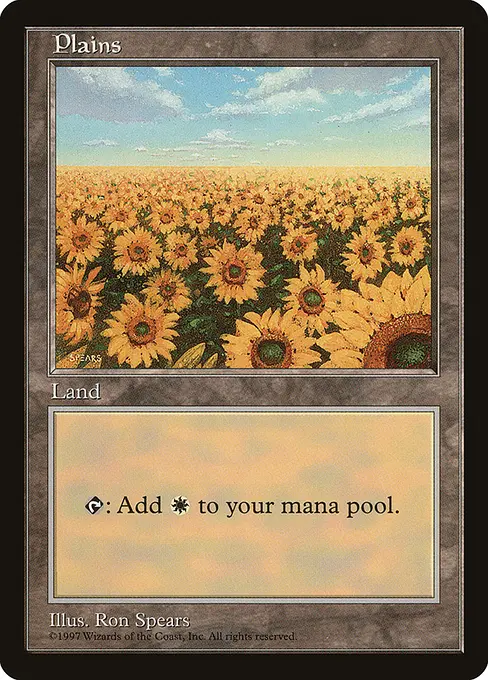
Collector’s tip: Look for the original Red Pack version rather than confusing it with other Plains cards from the APAC series. The three packs contain different illustrations for the same basic land type.
2. Red Pack – Forest: A Glimpse of Rural Japan
The Red Pack Forest is the second Japanese card in the first promotional pack.
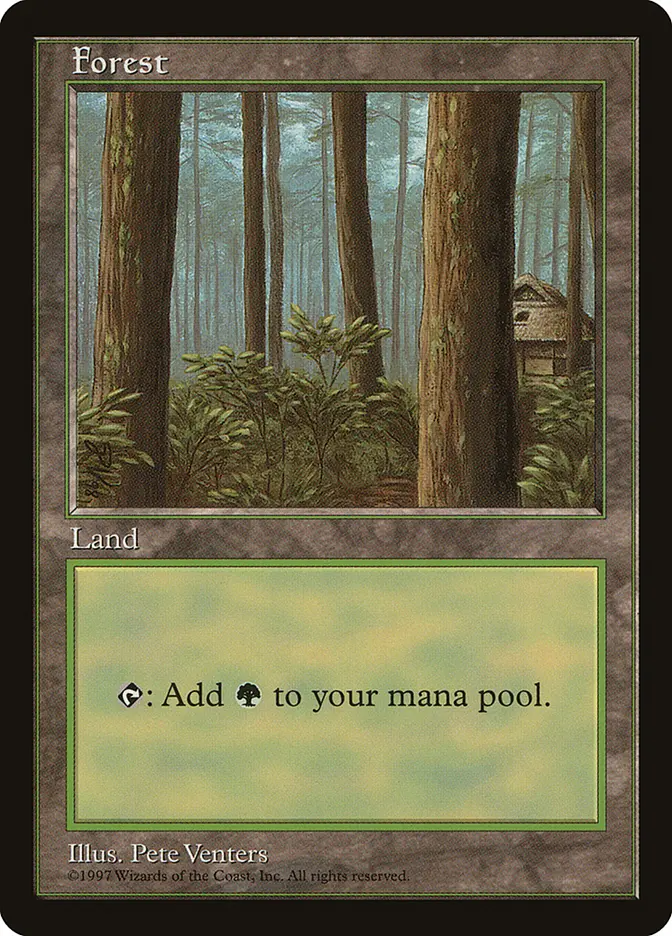
Its illustration captures a natural Japanese setting, with a landscape that feels connected to the country’s traditional countryside rather than an imaginary fantasy world.
Together with the Red Pack Plains, it represents the Japanese contribution to the first chapter of the APAC Lands collection.
For anyone collecting Japanese-inspired basic lands, these two cards are a natural starting point.
3. Blue Pack – Island: Meoto Iwa, Japan’s Wedded Rocks
One of the most recognizable Japanese references in the APAC Lands series appears in the Blue Pack Island.
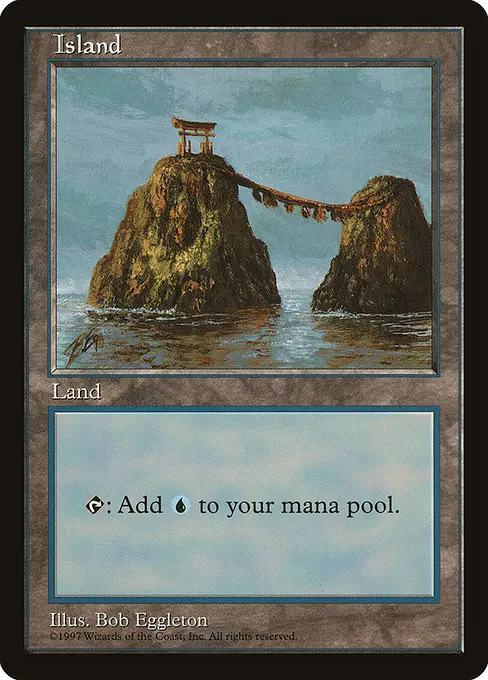
The artwork depicts Meoto Iwa, also known as the Wedded Rocks, a famous pair of sacred rocks located off the coast of Futami in Mie Prefecture.
Connected by a sacred shimenawa rope, the two rocks are traditionally associated with marriage and the union of two deities. They are also an iconic image of Japanese religious and cultural heritage.
The location is particularly interesting because it is not simply a generic coastal landscape. It is a real Japanese landmark with a strong cultural and spiritual identity.
For collectors, this Island is one of the most distinctive cards in the entire APAC series.
4. Blue Pack – Swamp: A Japanese Cemetery
The Blue Pack Swamp takes a rather different approach to Japanese inspiration.
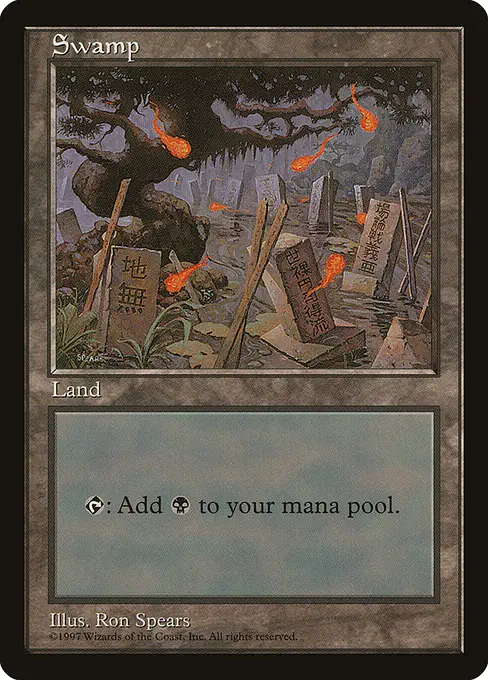
Instead of depicting a natural landscape, its artwork shows a Japanese-style cemetery, with gravestones carrying unusual inscriptions.
Look closely and you can find references to Magic characters hidden in the Japanese-inspired lettering, including Tim, Serra Angel, and Baron Sengir.
The inscriptions are playful phonetic adaptations of these character names using kanji-like combinations.
This makes the card particularly interesting for Magic enthusiasts: it combines Japanese visual references with a little piece of the game’s own history.
It is also a reminder that Japanese inspiration in Magic does not necessarily have to involve temples, mountains, or beautiful landscapes. Sometimes it can be found in much more unusual details.
5. Clear Pack – Mountain: Mount Fuji
If there is one APAC Land that deserves special attention from collectors interested in Japan, it is undoubtedly the Clear Pack Mountain.
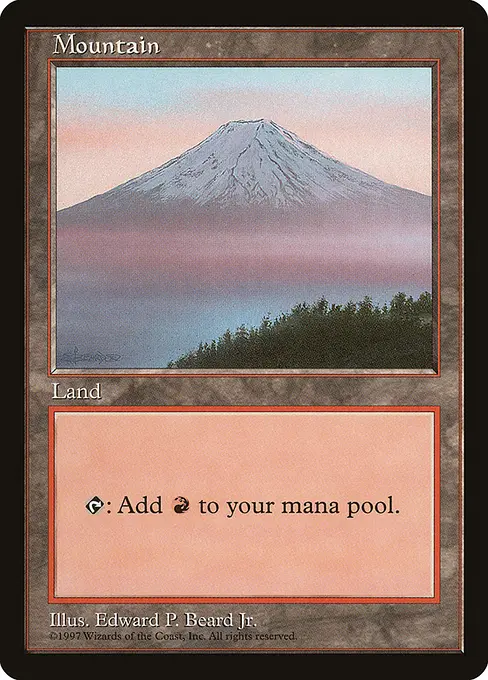
Its artwork depicts Mount Fuji, Japan’s most famous mountain and one of the country’s most recognizable symbols.
Rising above the surrounding landscape, Mount Fuji has been a source of inspiration for Japanese artists for centuries. It is deeply connected to Japanese identity, traditional art, literature, and spirituality.
Seeing it represented on a Magic basic land makes this card particularly special.
It is also one of the most immediately recognizable cards in the APAC collection. Even people unfamiliar with the series can appreciate the significance of its subject.
For anyone building a collection around Japanese culture, this Mountain is an absolute must-have.
Why APAC Lands Are a Must-Have for Japan-Inspired MTG Collectors
There are plenty of Magic cards featuring Japanese-inspired artwork, from modern alternate-art releases to cards connected with Kamigawa and Japanese artists.
However, the APAC Lands offer something different.
They were created more than two decades ago, at a time when Wizards of the Coast was experimenting with ways to connect Magic with audiences around the world.
Their artwork represents actual locations rather than fictional settings, and their promotional distribution gives them a particular place in the game’s history.
For Japan-focused collectors, the five Japanese APAC Lands are especially attractive:
- Red Pack Plains – Japanese landscape.
- Red Pack Forest – Japanese landscape.
- Blue Pack Island – Meoto Iwa.
- Blue Pack Swamp – Japanese-style cemetery.
- Clear Pack Mountain – Mount Fuji.
Collecting all five is a relatively focused way to build a small historical collection with a clear Japanese theme.
And if you want to go further, completing all three APAC packs means collecting the entire 15-card series, including the landscapes representing the other Asia-Pacific countries.
Whether you are interested in Japanese culture, alternative basic lands, or the history of Magic promotions, these cards offer something that newer releases cannot quite reproduce: the feeling of discovering a unique piece of the game’s past.

Where to Buy APAC Lands
Because APAC Lands were released as promotional cards in 1998, finding them today usually means looking at the secondary market.
You can search for individual cards if you only want the Japanese versions, or look for complete packs and collections if you want to own the entire series.
Here are a few options worth exploring:
- Individual APAC Lands: the best option if your goal is to collect the five Japanese cards without purchasing the entire series.
- Complete APAC Sets: ideal for collectors who want all 15 cards and the complete regional artwork collection.
- Original APAC Promotional Packs: particularly interesting for collectors who prefer sealed vintage products.
When purchasing, pay attention to the condition of the cards, their authenticity, and whether the seller is offering an individual card or a complete promotional pack.
For older Magic cards, comparing multiple listings is always a good idea.
Final Thoughts: A Small Piece of Japan in Your Magic Collection
The APAC Lands are a perfect example of how Magic: The Gathering can bring together gaming, art, geography, and cultural identity.
Their Japanese illustrations make them particularly appealing to collectors who appreciate the country’s landscapes and traditions. From the sacred Meoto Iwa rocks to the unmistakable silhouette of Mount Fuji, each card tells a small story about Japan.
They may be basic lands in terms of gameplay, but their historical background and distinctive artwork make them anything but ordinary.
If you collect Japanese-inspired Magic cards, the five Japanese APAC Lands should definitely be on your wishlist.
Sometimes, the most interesting cards in a collection are not the rarest creatures or the most powerful spells. They are the ones that tell a story.
Keep collecting Japanese inspired MTG Cards: