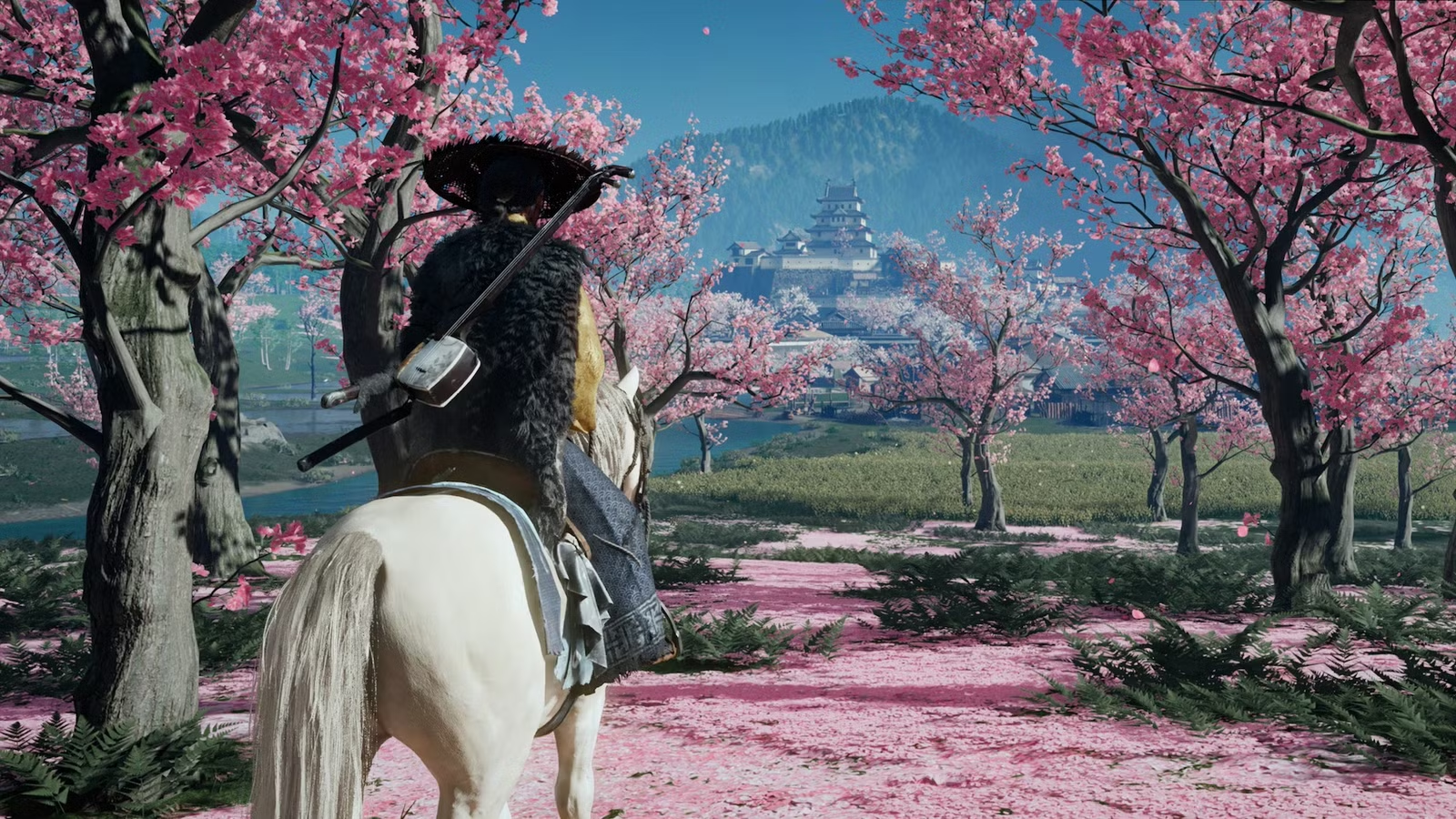
In Japanese folklore, a ghost is not always a creature to be feared. Sometimes it is the embodiment of an injustice that has never been resolved, a memory that refuses to disappear, or a warning about the consequences of human cruelty. These stories have shaped Japanese theater, literature, and cinema for centuries, creating a rich tradition in which the boundary between the living and the dead becomes a way to explore revenge, grief, and moral responsibility.
Released in 2025, Ghost of Yōtei takes these ideas in a different direction from its predecessor, Ghost of Tsushima. Set in 1603 in Ezo, the historical name for the northern territory corresponding broadly to modern-day Hokkaido, the game follows Atsu, a warrior whose pursuit of vengeance gradually transforms her into a legendary figure. Her story unfolds in a landscape shaped by snow-covered mountains, dense forests, and a cultural history that includes the traditions of the Ainu, the Indigenous people of northern Japan.
Developed by Sucker Punch Productions, Ghost of Yōtei combines historical fiction with Japanese ghost lore, regional history, and carefully researched cultural references. Its supernatural atmosphere is particularly significant because the game’s protagonist is not simply another warrior adopting an intimidating identity. She becomes associated with a specific figure from Japanese folklore: the onryō, an avenging spirit whose suffering and resentment continue beyond death.
Understanding these influences reveals how Ghost of Yōtei uses folklore to explore the relationship between revenge and identity, while its northern setting opens a window onto a part of Japanese cultural history that is often overlooked in samurai fiction.
The Onryō: Japan’s Vengeful Spirits
The most important folkloric reference in Ghost of Yōtei is the onryō, a spirit associated with resentment, injustice, and vengeance. Unlike the image of a ghost that simply returns to visit the living, an onryō is traditionally connected with a wrong that has not been adequately addressed. Its presence suggests that suffering cannot always be contained by death, and that the consequences of cruelty may continue long after those responsible believe themselves safe.
Japanese ghost stories contain many different kinds of supernatural beings, and the terminology can be complex. Yūrei is a broad term commonly used for the spirits of the dead, while onryō describes a more specific association with resentment and retribution. These categories overlap in literature and popular culture, but they are not interchangeable in every context.
The onryō became particularly influential through Japanese theater and later horror cinema. One of the best-known examples is Oiwa, the wronged woman at the center of Yotsuya Kaidan, a famous kabuki ghost story associated with the playwright Tsuruya Nanboku IV and first performed in 1825. Betrayal and cruelty transform Oiwa into a terrifying supernatural presence, making the story an enduring exploration of the relationship between injustice and revenge.
The importance of such stories lies in more than their frightening imagery. The ghost represents a past that cannot be safely ignored. Violence creates consequences that extend beyond the original act, and the supernatural becomes a means of expressing the persistence of suffering.
From the Wronged Dead to the Living Legend
Atsu’s story in Ghost of Yōtei draws on this cultural tradition without requiring the protagonist to become a literal supernatural being. In an interview with Game Informer, co-creative director Nate Fox explained that people in Ezo come to regard Atsu as an onryō because she repeatedly survives attempts to stop her revenge, becoming a legendary presence whose reputation precedes her. The concept therefore operates through both folklore and storytelling: Atsu is a human being, but the people around her begin to interpret her actions through the language of the supernatural. (Read the interview.)
This distinction is essential. Atsu’s association with the onryō does not mean that the game depicts a traditional Japanese ghost tale without modification. Instead, it adapts the figure to a story about a living warrior whose suffering, determination, and reputation make her appear almost impossible to defeat.
Her legend becomes a weapon in itself. Fear can influence how enemies perceive her, while rumors transform individual acts of violence into a larger narrative about a figure who cannot be stopped. The supernatural quality emerges from the gap between the person Atsu actually is and the identity others project onto her.
This is one of the most interesting ways in which Ghost of Yōtei develops the idea introduced in Ghost of Tsushima. Both games explore the creation of a ghost through reputation, but Atsu’s story draws more directly on the conventions of Japanese supernatural folklore.
Revenge, Grief, and the Cultural Power of Ghost Stories
Japanese ghost stories frequently explore the relationship between personal suffering and social injustice. A vengeful spirit may emerge from betrayal, violence, or a failure to acknowledge the harm done to someone who has been wronged. The horror comes not only from the threat posed by the ghost, but also from the knowledge that its anger has a history.
This tradition offers a useful way to interpret Atsu’s journey. Her pursuit of revenge is rooted in personal loss, but the consequences extend beyond the original tragedy. As her actions become known, she develops an identity that is no longer entirely under her control. The legend of the onryō can protect her by inspiring fear, yet it also threatens to define her through the violence she commits.
The tension between the individual and the legend is central to the emotional power of the story. Revenge may provide a clear objective, especially in a world where justice appears inaccessible, but it does not necessarily restore what has been lost. The more completely a person becomes identified with vengeance, the more difficult it becomes to imagine a future beyond it.
This is a familiar concern in Japanese ghost literature, although Ghost of Yōtei approaches it through an action-adventure narrative rather than a traditional supernatural tragedy. The folklore provides a framework for understanding Atsu’s transformation, while the game retains the freedom to question whether becoming a feared legend is ultimately a form of liberation or another kind of imprisonment.
Ezo in 1603: The Historical Frontier of Northern Japan
The setting of Ghost of Yōtei is as important as its supernatural themes. The game takes place in 1603, at the beginning of the Edo period, in a region known historically as Ezo. The name was used for northern territories associated with Hokkaido and surrounding areas, although its geographical meaning changed over time.
In the early seventeenth century, Hokkaido was not simply another region of Japan governed in the same way as the more densely settled areas farther south. Japanese political and commercial influence was particularly concentrated in the south of the island, including the Oshima Peninsula, where the Matsumae clan played an important role in relations with the Ainu and in trade across the northern frontier.
Much of Hokkaido remained outside the direct settlement patterns familiar from central Japan. The region was home to Ainu communities with their own social structures, languages, traditions, and relationships with the land. Its history cannot be reduced to a story of an empty wilderness awaiting Japanese settlement.
Sucker Punch’s own development research emphasizes this distinction. In a PlayStation Blog article about choosing Hokkaido as the setting, co-creative director Nate Fox describes Ezo as a northern frontier in 1603, with relatively sparse Japanese settlement outside areas such as the Oshima Peninsula. The studio also acknowledges that its version of Hokkaido is fictional, even though the development team researched real locations and historical contexts.
This is important when interpreting the game’s landscapes and conflicts. Its wilderness is a dramatic representation shaped for an open-world adventure, not a complete reconstruction of the region’s historical population or political relationships.
RELATED
Ghost of Tsushima: Japanese Folklore, Shinto, and Samurai Culture
Few video games make the landscape feel as alive as Ghost of Tsushima.

A Frontier Between Different Worlds
Ezo provides a different backdrop from the island of Tsushima. The latter is associated with a specific historical invasion, while the former offers a setting in which Japanese political authority, local communities, trade, and territorial expansion intersect.
The result is a world in which identity is shaped by geography as well as personal history. Atsu travels through a region where the relationship between established authority and local experience is more complicated than a simple division between samurai and enemies.
The historical context also complicates the romantic image of the wandering warrior. The samurai did not exist outside society, and the expansion of Japanese influence into northern territories affected people who already lived there. Understanding this context helps prevent the game’s frontier imagery from being mistaken for an objective historical account.
Ezo is compelling precisely because it is not culturally uniform. Its history includes encounters between different communities, competing interests, and changing relationships with the land. That complexity gives the setting a distinctive identity beyond its dramatic scenery.
Ainu Culture: The Indigenous Heritage of Hokkaido
One of the most significant cultural dimensions of Ghost of Yōtei is its engagement with Ainu heritage. The Ainu are an Indigenous people whose traditional homeland includes Hokkaido and other parts of northern Japan. Their culture has its own language, oral traditions, artistic practices, spiritual concepts, and relationship with the natural environment.
Ainu history is distinct from the history of the Japanese samurai class. Although Ainu communities maintained relationships with Japanese political authorities through trade and other forms of contact, those relationships were shaped by unequal power, territorial expansion, and discrimination. Their cultural traditions should therefore not be treated as a regional variation of mainstream Japanese folklore.
Sucker Punch has explicitly acknowledged the importance of this distinction. In the studio’s developer account of its cultural research for Ghost of Yōtei, Fox explains that the team worked with an Ainu cultural adviser and visited the Nibutani Ainu Museum. The developers also learned about traditional foraging practices and incorporated elements of those experiences into the game.
This research does not make the game a complete representation of Ainu culture, but it demonstrates an effort to move beyond the more familiar imagery of samurai films. The northern setting required the developers to consider the history and traditions of the people who already inhabited the region, rather than treating Hokkaido as merely a remote landscape for a warrior’s adventure.
Kamuy and the Ainu Spiritual World
A central concept in Ainu spiritual traditions is kamuy, a term commonly used for spiritual beings associated with animals, natural phenomena, and other aspects of existence. The concept has its own cultural and linguistic context and should not simply be equated with the Japanese term kami, despite some broad similarities in how both relate to the spiritual world.
This distinction matters because it is tempting to interpret every sacred mountain, animal companion, or supernatural event in a game set in Hokkaido through a single, generalized idea of Japanese nature worship. Doing so risks erasing the differences between Japanese and Ainu traditions.
Ainu culture includes distinctive forms of oral storytelling, ceremony, craftsmanship, and relationships with the natural world. Visitors can learn more through the Upopoy National Ainu Museum and Park, which is dedicated to preserving and sharing Ainu history and culture through exhibitions, performances, and educational experiences.
When considering Ghost of Yōtei, it is important to separate three things: documented Ainu traditions, the developers’ stated research and influences, and the fictional choices made for the game’s narrative. These categories can inform one another, but they should not be treated as identical.
The game’s cultural value lies partly in encouraging players to investigate a heritage that is often overlooked in popular representations of Japan. That curiosity is most productive when it leads beyond the fictional world and toward sources produced by Ainu institutions and cultural practitioners themselves.
WHERE TO BUY
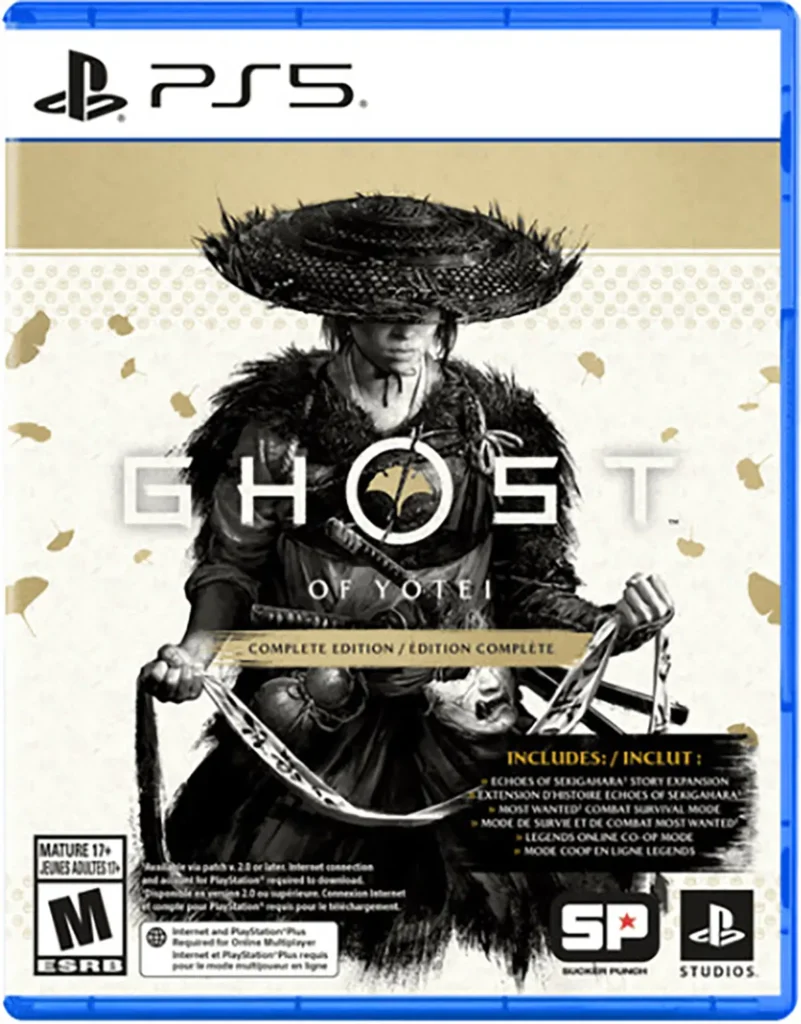
Ghost of Yotei Complete Edition
PS5 · Physical Edition
Affiliate links. We may earn a commission at no extra cost to you.
Mount Yōtei: A Landscape Shaped by Memory
Mount Yōtei is one of the defining features of the game’s visual identity. Its distinctive volcanic silhouette dominates the surrounding landscape, giving the player a recognizable point of reference while reinforcing the connection between the protagonist and the region she inhabits.
The mountain is real and located in Hokkaido. Its resemblance to Mount Fuji has earned it the nickname Ezo Fuji, and its imposing presence makes it an effective visual anchor for the game’s world.
In Ghost of Yōtei, the landscape is not merely a backdrop for combat and exploration. It helps establish a sense of place, connecting Atsu’s personal history to a region with its own geographical and cultural identity. The mountain’s persistence contrasts with the instability of human life: political power changes, families are destroyed, and individuals become legends, while the physical landscape endures.
This is an artistic interpretation rather than a claim that the mountain’s narrative role directly reproduces a specific Ainu religious belief. Its meaning in the game emerges from the relationship between geography, memory, and the protagonist’s story.
The setting also demonstrates how real locations can become powerful storytelling devices in historical fiction. Players may first recognize Mount Yōtei as an impressive landmark, but its repeated presence can gradually make the region feel like a place with its own history rather than an interchangeable open-world environment.
The Ezo Wolf: Extinction and the Symbolism of the Wild
The wolf is another important symbol associated with Ghost of Yōtei. The Ezo wolf, also known as the Hokkaido wolf, was a real wolf subspecies native to Hokkaido that became extinct during the modern period, largely in the context of changing land use, livestock farming, and deliberate eradication.
The animal’s historical disappearance gives it a particular significance when considered alongside the game’s portrayal of northern wilderness. Its presence in the game’s imagery evokes a landscape that has changed dramatically over time, reminding players that the natural world of historical fiction is not simply an untouched version of the modern environment.
The Ezo wolf should not be confused with the Japanese wolf that once inhabited Honshu, Shikoku, and Kyushu. These were distinct historical wolf populations, and both are now extinct. Scientific research has examined the genetic and morphological differences between the Ezo wolf and other wolf lineages, adding a real zoological dimension to its cultural significance. A useful starting point is this peer-reviewed study on the Ezo wolf.
In the context of Ghost of Yōtei, the wolf also functions as a visual and emotional symbol. Its association with the wilderness reinforces the game’s northern identity, while its presence alongside Atsu evokes themes of survival, isolation, and the relationship between humans and the natural world.
It would be misleading, however, to claim that every symbolic role assigned to the wolf in the game comes directly from Ainu folklore. The animal’s historical presence in Hokkaido is a documented fact; its specific narrative meaning in the game is a creative interpretation.
This distinction does not diminish the imagery. Instead, it provides a more interesting way to appreciate it: the game combines a real element of Hokkaido’s natural history with a fictional story about a warrior whose identity is shaped by the landscape she traverses.
Music, Instruments, and the Sound of Northern Japan
The cultural identity of Ghost of Yōtei also extends to its soundscape. Music helps distinguish its northern setting from the more familiar imagery associated with traditional samurai cinema, while giving Atsu’s personal journey an emotional dimension.
The shamisen, a traditional Japanese string instrument, is particularly significant to the protagonist. Its presence connects the character to memory and family, making music part of her identity rather than simply a background element in the game.
The soundtrack also draws on a broader range of musical influences. In an interview with EARMILK, members of the audio team discussed their approach to the sound of Ezo, including the use of traditional Japanese instruments and recordings of Ainu instruments such as the tonkori and mukkuri. (Read the interview.)
These instruments have distinct cultural contexts. The tonkori is a traditional string instrument associated with Ainu music, while the mukkuri is a mouth harp. Their inclusion offers another example of how the game’s northern setting creates opportunities to move beyond a generalized sound of historical Japan.
Music cannot, by itself, provide a complete representation of a culture. Nevertheless, the use of different instruments helps the game’s soundscape reflect the variety of traditions that inform its fictional world.
The contrast between music, silence, and environmental sound is also important. Wind, wildlife, and the open landscape establish an atmosphere in which the wilderness feels present even when the player is not engaged in combat. As with the visual design, the natural world becomes an active part of the storytelling.
Historical Research and Creative Interpretation
Like its predecessor, Ghost of Yōtei is historical fiction rather than a documentary reconstruction. Its setting draws on real geography and the historical context of early seventeenth-century Ezo, while its characters and central revenge narrative are fictional.
The game’s treatment of the onryō is a particularly clear example of this relationship between research and invention. The concept comes from Japanese supernatural storytelling, but Atsu’s transformation into a feared living legend is a narrative adaptation rather than a literal reproduction of a traditional ghost tale.
The same principle applies to the game’s cultural references. Ainu traditions, regional history, musical instruments, and the natural environment provide real foundations for the fictional world, but their presence should not be taken to mean that every scene accurately represents a specific historical custom or spiritual belief.
This is especially important when discussing Indigenous culture. Cultural consultation can help developers avoid simplistic or misleading portrayals, but no single game can represent the full diversity of Ainu history and contemporary experience.
For players interested in learning more, the best approach is to treat the game as a starting point. The National Ainu Museum and Park offers resources for understanding Ainu culture, while the Hokkaido Museum provides broader historical context for the region and its changing relationship with the rest of Japan.
The distinction between fiction and historical evidence makes the game more interesting, not less. It allows players to appreciate the creative interpretation while investigating the real cultural traditions that give the setting its depth.
Why Ghost of Yōtei Matters Beyond Gaming
Ghost of Yōtei uses Japanese ghost lore to explore how personal suffering can become a public legend. Atsu’s association with the onryō transforms revenge into something larger than an individual struggle, drawing on a tradition in which unresolved injustice continues to haunt the living.
Its setting adds another dimension to that story. Ezo is not simply a remote wilderness filled with dangerous warriors; it is a region with a complex history, an Indigenous heritage, and a natural environment that has changed profoundly over time. The game’s references to Ainu culture, its northern landscapes, and its musical influences give the world a distinctive identity beyond the familiar conventions of samurai fiction.
The game does not offer a complete account of Japanese ghost lore or Ainu history, and its fictional world should not be confused with a historical record. Its greatest strength lies in the way it brings different cultural references into a story about memory, revenge, and identity.
Ultimately, Atsu’s transformation raises a question that extends beyond Japanese folklore: what happens when a person becomes defined by the injustice they have suffered? The onryō tradition gives that question a supernatural form, turning the persistence of anger into a legend that cannot easily be dismissed.
In the world of Ghost of Yōtei, the ghost is both a frightening presence and a reminder of the past. It is the story people tell about a warrior, the memory of a lost home, and the consequences of violence that refuses to remain buried. By combining this idea with the history and cultural richness of northern Japan, Sucker Punch creates a distinctive interpretation of the samurai adventure—one in which the most powerful legends emerge from the complicated relationship between people, place, and memory.
RELATED
Ghost of Tsushima vs Ghost of Yotei
At first glance, Ghost of Tsushima and Ghost of Yōtei share a familiar formula: a lone warrior, a beautiful but dangerous landscape, and a journey shaped by violence, revenge, and personal loss. Yet the meaning of the word ghost changes between the two games.